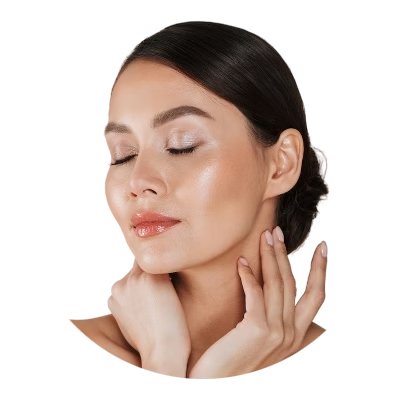
Creams and non-invasive anti-aging treatments can delay these changes but cannot stop them. A surgical facelift, however, offers a long-term solution that can significantly reduce these signs of ageing and restore a youthful appearance.
What is a facelift?
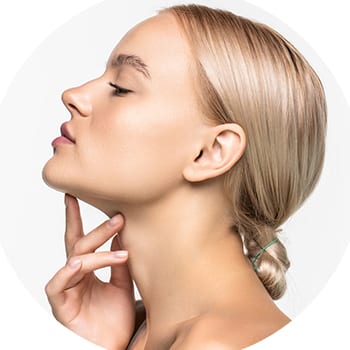
A facelift is an aesthetic surgical procedure that aims to rejuvenate the face by removing excess loose skin, tightening the underlying tissues and restoring the natural contours of the face and neck. It helps address problems such as loose skin on the face and neck, wrinkles, loss of volume, slack muscles, loss of contour and other visible signs of ageing.
Everyone ages differently and at a different pace. For optimal results, a facelift must therefore be carefully planned, and the appropriate type of facelift chosen and tailored to each individual case.
A facelift is not a quick “fix” but a thoughtful intervention that combines medical expertise with the art of shaping the face. When done expertly, with good planning and a modern technique, a facelift can give very natural and long-lasting results that surpass all other anti-aging treatments. If you are prepared for a slightly longer recovery period in exchange for a reflection in the mirror that is at least a decade younger, the facelift is the gold standard worth considering.
By combining a facelift with other complementary procedures, such as upper or lower eyelid lifts (blepharoplasty), fat transfer, liposuction, lipofilling, dermal fillers, Botox, microdermabrasion and the like, almost all problems of facial ageing can be addressed.
Types of facelift
Depending on the patient's individual needs and indications, a complete (full) facelift or a partial facelift can be performed.
A full facelift is a comprehensive procedure that targets and treats the middle and lower face as well as the neck. It is the most intensive form of facelift and is ideal for people with significant signs of ageing. It requires a somewhat longer recovery than a partial facelift, but gives impressive and long-lasting results, with effects that can last between 10 and 15 years. However, bear in mind that how long the results last depends, among other things, on your lifestyle, genetics and how well you care for and protect your skin.
A partial facelift targets only certain areas, leaving untouched the parts of the face that do not need intervention. Recovery is faster and the corrections are more discreet.
- A mini facelift, or lower face lift, is a surgical procedure aimed at lifting the lower half of the face and the upper half of the neck. It is less invasive than a full facelift, with a shorter recovery period. It is the ideal choice for people in their forties and fifties who show visible signs of ageing. It can also be performed on people over 55, but with a limited ability to tighten the skin completely, so these patients more often need a full facelift.
- A mid face lift is mostly performed on younger people or those with characteristic hollows and laxity in the middle of the face. It aims to lift loose skin in the central part of the face, improve volume and contours and reduce the nasolabial folds.
- A temporal lift is a minimally invasive surgical procedure that lifts the outer parts of the brows and tightens the skin of the temples, giving the face a refreshed and rejuvenated look.
- A brow lift (forehead lift) involves tightening the forehead and lifting the brows. It is mostly performed on people with a low forehead and drooping brows.
- A neck lift is a procedure that involves tightening the platysma (the neck muscle), but it is rarely performed on its own. It is usually carried out as part of a full facelift.
What does the procedure look like?
A facelift is performed under general anaesthesia or local anaesthesia with sedation and takes between 2 and 4 hours.
Based on the patient's indications, the surgeon chooses the method and technique that will best solve the problems of their face. In general, discreet incisions are made along the hairline and around the ears to keep the scars minimally visible. The procedure itself involves lifting (tightening) the skin and the tissues and muscles beneath it. Accumulated fat in the face and neck can be shaped, removed or redistributed. After the intervention, the facial skin is sutured over the newly positioned contours of the face and the excess skin is removed.
Potential risks and how to minimise them
Although complications are rare, like any operation a facelift carries certain risks, such as infection, haematomas, bruising, temporary numbness or injury to the facial nerve. Choosing a reputable surgeon, proper preparation (stopping smoking, stopping blood-thinning medicines) and strictly following the post-operative instructions significantly reduce the likelihood of complications.
Recovery and results
After the operation the patient stays in hospital for one or two nights, or goes home after a few hours (most often after partial lifts) if the procedure was performed under local anaesthesia.
The recovery period depends on the complexity of the procedure. Swelling and bruising are normal (they peak on the second or third day) and subside within 10–14 days. A return to light activities is possible after 2 weeks. The stitches are removed by the end of the second week (usually after seven to ten days), while the full results become visible within 3–6 months, once the tissues have fully “settled”.
A well-performed facelift gives a long-lasting rejuvenating effect with a natural look. The results last about 10 to 15 years. After that, ageing continues, but you will always look younger than if you had not had the operation. Combining it with non-surgical treatments – hyaluronic fillers, botulinum toxin and laser resurfacing – prolongs the effect and maintains skin tone.
Are you a candidate for a facelift?
You can find the answer at Menssana Special Hospital, where we perform this type of operation with outstanding success and many years of experience, thanks to an expert team led by Dr Zoran Lekić, an excellent specialist with more than 30 years of surgical experience and 15 years of work in Dubai alongside the world's leading experts.
With new technology and new techniques, recovery is very short, the incisions practically invisible and the results impressive.
Book a free consultation at the clinic, or a Zoom online consultation, which is also available.